ArtLingua Article
Tier-Aware ESL Scaffolding: Tailoring Art Vocabulary for Tier 1, 2, and 3 Learners
Master ESL scaffolding in art lessons. Discover how to tailor art vocabulary for Tier 1, Tier 2, and Tier 3 learners without forcing unnatural speech.
ESL Scaffolding Art Lesson: Tier 1, 2, and 3 Vocab Guide
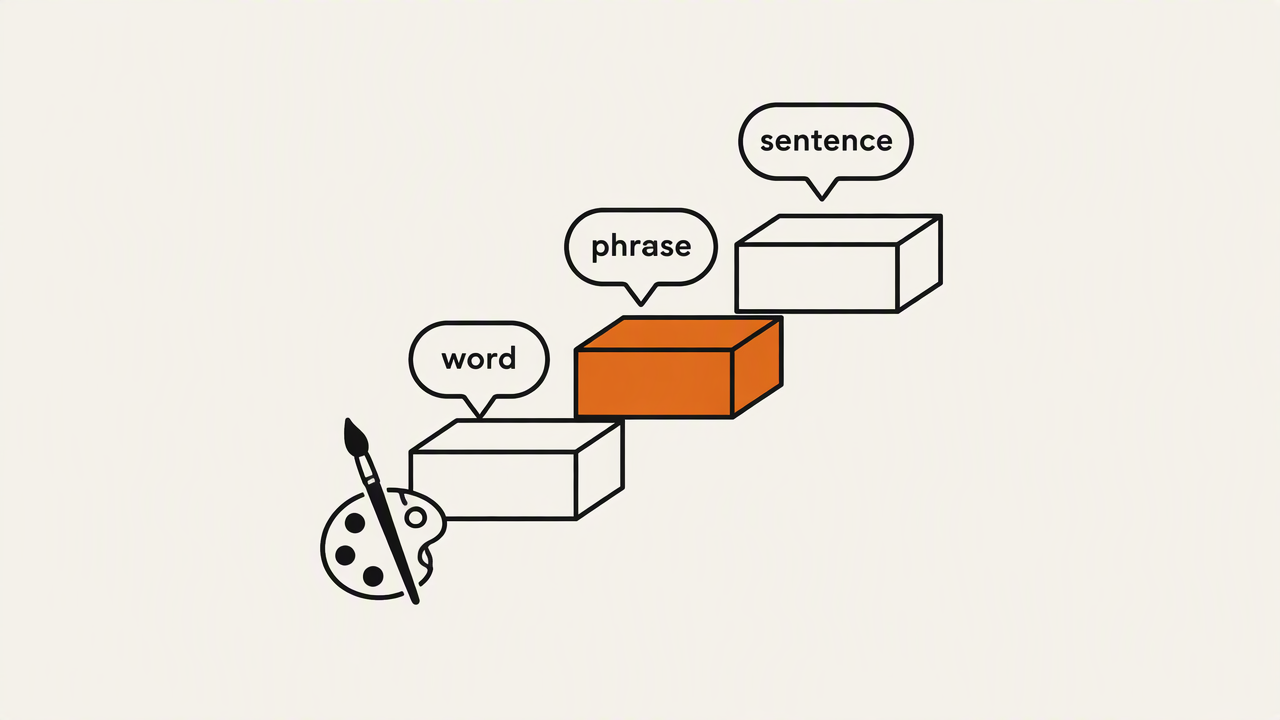
Teaching visual arts to English language learners (ELLs) offers a rare classroom dynamic: creative expression bypasses verbal limitations. However, when an ESL scaffolding art lesson lacks precise language calibration, studio time can quickly stall. Beginner students freeze when asked to explain their color choices, while advanced learners grow bored with overly simplistic instructions.
For foreign English teachers and homeroom educators in Chinese primary and secondary schools, managing mixed-ability cohorts under strict time limits is a daily reality. The secret to unlocking both artistic confidence and linguistic growth lies in ESL tier vocabulary scaffolding. By aligning physical creative tasks with calibrated language expectations, teachers can eliminate classroom anxiety while driving meaningful language acquisition.
This comprehensive guide breaks down how to decode ESL language tiers in an art studio context, deploy automated sentence stems, and construct immersive, low-anxiety art activities tailored to every developmental stage.
Decoding Tier 1, Tier 2, and Tier 3 ESL Art Integration
In standard linguistics, vocabulary tiers distinguish everyday words from specialized academic terms. When applied to English-through-art teaching, tier scaffolding defines not just the words taught, but the exact verbal and receptive output expected from each student.
A tier-aware framework ensures you never demand spontaneous verbal production from a complete beginner or assign passive listening to a student ready for complex critiques.
+-------------------------------------------------------------------------+
|                  ESL ART SCAFFOLDING AT A GLANCE                        |
+--------+-----------------------+-------------------+--------------------+
| Tier   | Proficiency Profile   | Verbal Expectation| Core Art Modality  |
+--------+-----------------------+-------------------+--------------------+
| Tier 1 | True Beginner / A0-A1 | Zero Verbal Demand| Physical Pointing, |
|        | (Silent Phase)        | Non-Verbal TPR    | Color Matching     |
+--------+-----------------------+-------------------+--------------------+
| Tier 2 | Intermediate / A2-B1  | Structured Stems, | Guided Choices,    |
|        | (Emerging Output)     | Cloze Dialogues   | Technique Labels   |
+--------+-----------------------+-------------------+--------------------+
| Tier 3 | Advanced / B2-C1      | Spontaneous Text, | Comparative Crit,  |
|        | (Independent Express) | Analytical Speech | Conceptual Theory  |
+--------+-----------------------+-------------------+--------------------+
Tier 1: Zero Verbal Demand and Total Physical Response (TPR)
Tier 1 learners are often in their silent period. Demanding that a beginner stand up in front of 40 peers to say "I used complementary colors" creates severe affective filter blockages.
For Tier 1 learners:
- Target Output: Physical action, pointing, matching, and visual sorting.
- Teacher Script Focus: Explicit Total Physical Response (TPR), modeled actions, and direct sensory keywords (cut, fold, red, press).
- Classroom Strategy: Use binary visual checks. Instead of asking "What tool do we need?", hold up scissors and glue, asking students to point to or hold up the cutting tool.
Designing high-impact beginner ESL art activities requires crafting tasks where understanding is demonstrated entirely through making rather than speaking.
Tier 2: Guided Choices and Structured Sentence Frames
Tier 2 learners understand general classroom directives and possess functional baseline vocabulary. However, they struggle to organize spontaneous syntax when describing abstract visual concepts.
For Tier 2 learners:
- Target Output: Cloze-style verbal responses, dual-choice selections, and framed observations.
- Teacher Script Focus: Consistent sentence frames posted on visual anchor charts ("I chose ___ because it is ___.").
- Classroom Strategy: Provide structured contrast pairs (warm vs. cool, rough vs. smooth, foreground vs. background).
Tier 3: Expressive Synthesis and Conceptual Art Vocabulary
Tier 3 learners have mastered basic communicative English and are ready to tackle specialized discipline-specific terms (Tier 3 lexicon according to Beck & McKeown's traditional model).
For Tier 3 learners:
- Target Output: Comparative analysis, process justification, and open-ended peer critique.
- Teacher Script Focus: Facilitating discourse around composition, balance, thematic symbolism, and cultural context.
- Classroom Strategy: Challenge students to critique artistic balance, contrast, and emotional tone using complex connectors ("While the background utilizes muted tones, the foreground creates focal emphasis through...").
Automatic Sentence Stems and Target Vocabulary Generation
Effective art lessons for ESL students require structured language architecture embedded directly into the lesson plan. Teachers do not need to spend hours manually writing sentence frames for multiple grade levels. Modern instructional design leverages automated constraint engines to map visual tasks to precise language supports.
Using an intuitive tool like the Free AI ESL Art Lesson Plan Generator allows teachers to enter their grade level, target art element, and tier profile to generate ready-to-teach scripts with integrated sentence stems.
Scaffolded Sentence Framing Across Tiers
Here is how a single art concept—Texture (Collage Making)—is scaffolded across all three tiers:
[ Tier 1 Scaffolding: Visual & Physical Action ]
Teacher: "Show me ROUGH." (Teacher rubs sandpaper, students hold up textured scrap)
Receptive Target: [rough / smooth / paper / glue]
Student Response: Holds up corresponding material (Zero verbal pressure).

[ Tier 2 Scaffolding: Controlled Sentence Stem ]
Visual Anchor Chart: "My collage feels ______ because I used ______."
Word Bank: [bumpy, flat, soft, hard] + [cardboard, cotton, foil, string]
Student Response: "My collage feels bumpy because I used cardboard."

[ Tier 3 Scaffolding: Analytical Expression ]
Discussion Prompt: "How does the physical texture support your subject matter?"
Sentence Frame: "By contrasting ______ with ______, I highlighted the ______."
Student Response: "By contrasting rough burlap with smooth foil, I highlighted the industrial theme."
Building Reusable Visual Anchor Charts
Visual anchor charts provide constant cognitive support during studio production. A reliable anchor chart contains three distinct visual zones:
- The Tool/Material Zone: Real objects or photos paired with singular, bolded nouns (sponge, palette, bristles).
- The Action Zone: Illustrated verbs linked to physical studio movements (dab, blend, carve, trace).
- The Dialogue Zone: Tier-calibrated sentence stems written in high-contrast ink for quick student reference during clean-up and informal review.
Bridging Speaking Barriers Through Hands-On Art Making
Art studios naturally reduce the affective filter—the psychological barrier that prevents language learners from taking risks. When students focus their fine motor skills on tactile materials, their fear of making linguistic mistakes drops significantly.
+-------------------------------------------------------------------------+
|                  THE LOW-AFFECTIVE FILTER ART CYCLE                     |
|                                                                         |
|  1. Concrete Demonstration  -->  2. Physical Mimicry & Exploration      |
|             ^                                      |                    |
|             |                                      v                    |
|  4. Low-Stakes Verification <--  3. Embedded Vocabulary Repetition      |
+-------------------------------------------------------------------------+
1. The "Show-Then-Do" Micro-Sequencing Loop
Traditional ESL lessons often frontload 15 minutes of vocabulary drilling before students touch any supplies. In large public school classrooms, this approach leads to rapid disengagement and behavioral disruptions.
Instead, employ micro-sequencing loops:
- Step 1 (Teacher Action): Model a 45-second physical technique while repeating a targeted keyword twice ("Press down. Firm pressure.").
- Step 2 (Student Mirroring): Direct the class to execute that single action immediately.
- Step 3 (Receptive Verification): Move through the room checking physical execution rather than asking verbal comprehension questions.
2. Gesture-Anchored Studio Routines
Pair every procedural instruction with an unmistakable physical gesture. This ensures that language comprehension is never a bottleneck for classroom safety or task execution.
- "Hold Up Your Work": Two hands holding paper above head height.
- "Hands in Lap / Brushes Down": Clapped hands placed flat on the desk edge.
- "Supply Captains Only": Pointing index finger to the badge or designated station monitor.
When managing high student counts, combining gestures with systematic logistics is critical. Learn more about optimizing studio traffic in our guide on Class-Size-Aware Clean-Up Staging.
Tailoring Scaffolding for Large Public School Classrooms
Implementing individualized language scaffolding can feel daunting when facing a room of 45 to 50 students in a Chinese public school setting. Teachers need simple, repeatable routines that maintain high engagement without requiring custom worksheets for every seat.
+-------------------------------------------------------------------------+
|              LARGE CLASS SCAFFOLDING ARCHITECTURE (40-50 STS)           |
+-------------------------------------------------------------------------+
|  [ Row 1-2: Front Group ]       [ Row 3-4: Mid Group ]      [ Row 5-6 ] |
|  - Physical supply anchors      - Shared Stem Cards         - Peer Crit |
|  - High visual visibility       - Dual-choice prompts       - Monitors  |
+-------------------------------------------------------------------------+
|  Supply Monitors: Handle materials distribution to prevent movement      |
|  Universal Choral Echo: Low-anxiety collective pronunciation             |
|  Silent Visual Checkpoints: Thumbs up / Colored card verification       |
+-------------------------------------------------------------------------+
Table Captains and Peer-Scaffolded Modeling
Organize seating charts into functional studio clusters. Assign an intermediate (Tier 2) or advanced (Tier 3) student as a table monitor. Their role is not to translate instructions, but to physically model the steps for Tier 1 learners at their table.
This structure frees the lead foreign teacher to circulate through the room, troubleshoot technique, and deliver individualized vocabulary reinforcements. For deep insights on managing high-density classes, read our blueprint on Art Lessons for Large Chinese Public School Classes (40–50 Students).
Low-Stress Formative Assessment Checks
Avoid calling on individual shy students at random to demonstrate vocabulary recall. Instead, use universal formative verification techniques:
- The Canvas Point: "Point to your complementary color pair." (Teacher scans 40 desks in 10 seconds).
- Dual-Color Ballot: Students hold up a red or blue crayon to vote on whether an artwork displays symmetric or asymmetric balance.
- Choral Response Stems: Lead a rhythmic call-and-response using the posted anchor chart stems before dismissing tables to clean up.
Frequently Asked Questions
What is the difference between linguistic vocabulary tiers and ESL scaffolding tiers?
Traditional vocabulary tiers (Beck & McKeown) classify English words into Tier 1 (basic everyday words like dog), Tier 2 (cross-curricular academic words like contrast), and Tier 3 (domain-specific technical terms like monochromatic). ESL scaffolding tiers classify the student's current communicative capability, dictating the level of verbal scaffolding, sentence framing, and cognitive demand required for them to participate successfully.
How do I teach an art lesson if my students have zero English ability?
Focus entirely on Tier 1 zero-verbal-demand scaffolding. Use Total Physical Response (TPR), physical gestures, direct visual modeling, and color-coded materials. Allow students to demonstrate comprehension through their creative physical output rather than spoken answers.
Can I teach advanced art theory to beginner English learners?
Yes. Complex concepts like composition, balance, and color harmony can be taught visually. Simplify the receptive language ("Make left side match right side" for balance) while keeping the hands-on art task sophisticated and age-appropriate.
How much time should I spend pre-teaching vocabulary in a 45-minute art lesson?
No more than 3 to 5 minutes. In an ESL art context, language is best acquired in context during the art-making process. Introduce 1 to 3 target terms during the opening demonstration, then reinforce those words at the students' desks while they work.
Effortless, Tier-Aware Art Planning with ArtLingua EEEEK!
Scaffolding art vocabulary across different proficiency levels does not have to mean hours of tedious preparation. With the ArtLingua EEEEK! Generator, you can create complete, timed, tier-aware ESL art lesson plans in seconds.
Simply select your grade level, specify your students' ESL tier, input your available materials, and receive a fully structured lesson complete with step-by-step teacher scripts, visual anchor prompts, and clean-up logistics designed for real classrooms. Try EEEEK! Free today and transform your English-through-art teaching.