ArtLingua Article
Empty Room Mode: Zero-Prep, No-Supply Art & English Lesson Generator
Generate empty room art lesson plans when your classroom has zero supplies. Discover high-engagement, zero prep ESL art activities that teach English effortlessly.
Empty Room Art Lesson Plans: Zero Prep, No Supplies
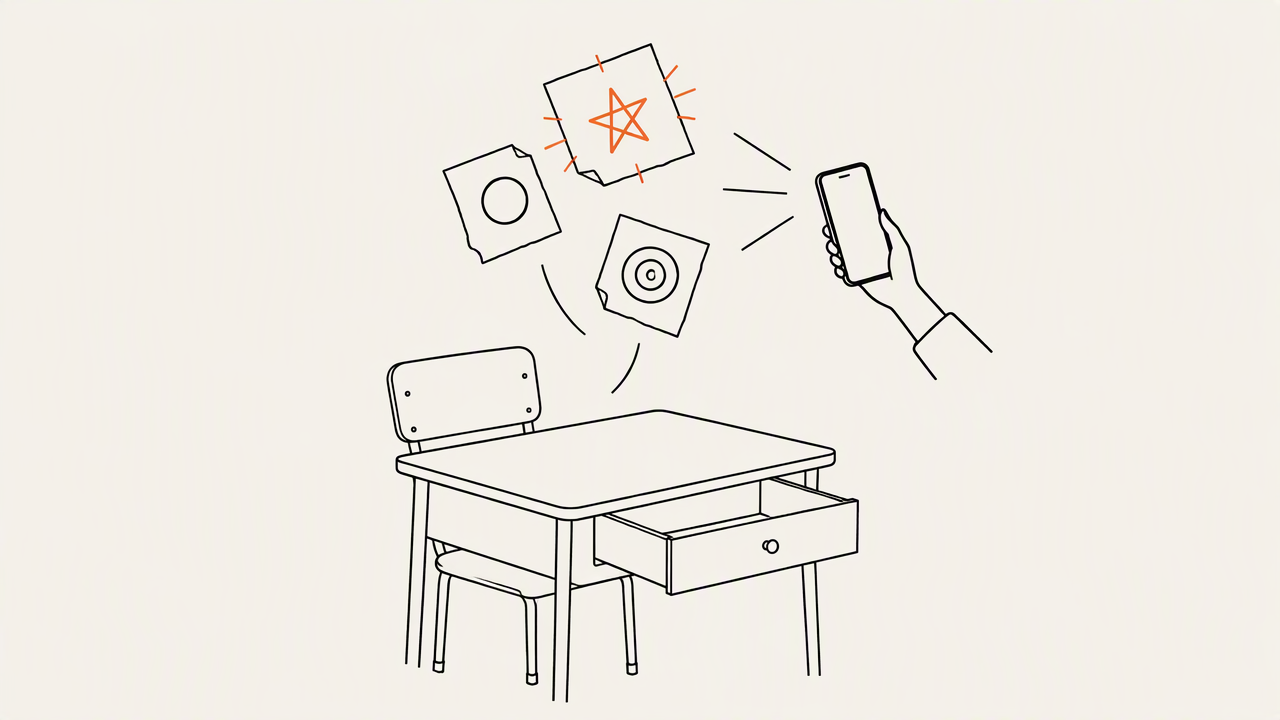
Every foreign English teacher in China knows the sinking feeling of walking into an assigned classroom only to find zero materials. The promised watercolor sets never arrived, the construction paper is locked in an administrator's cabinet across campus, and forty-five energetic students are staring up at you expectantly. In these high-stakes moments, relying on empty room art lesson plans is not just a backup strategy—it is an essential survival skill.
Teaching English through visual arts normally demands physical mediums like pastels, clay, paint, and specialty paper. However, a sudden supply shortage does not mean your pedagogical goals must collapse into chaotic busywork. By shifting your instructional framework to zero prep ESL art, you can lead rigorous, creative, and language-rich sessions using only the physical architecture of the room, everyday desk items, or purely conceptual art forms.
This guide explores how to pivot instantly when resources vanish. You will learn how to leverage deterministic lesson generation, implement creative studio exercises using minimal desk supplies, and facilitate zero-material English activities that keep students immersed from the opening warm-up to the final bell.
How Empty Room Mode Solves Sudden Supply Shortages
Resource gaps in international and bilingual teaching environments are rarely predictable. A scheduled art room might be requisitioned for an unannounced school assembly, forcing you into a standard homeroom stripped of water basins, brushes, or tabletop protectors. When your lesson plan hinges on physical media that does not exist, improvisation often leads to loose classroom management and diluted language outcomes.
ArtLingua EEEEK! introduced Empty Room Mode precisely to eliminate this emergency guesswork. When activated, the constraint engine recalculates your entire instructional blueprint, bypassing physical inventory requirements while preserving core visual art elements like line, value, texture, space, and perspective.
+-------------------------------------------------------------+
|                  TRADITIONAL ART LESSON                     |
|  Heavy Materials --> Lengthy Setup --> Fragile Workflow      |
+-------------------------------------------------------------+
                              vs.
+-------------------------------------------------------------+
|                      EMPTY ROOM MODE                        |
|  Found Textures / Body Geometry --> Direct Visual Immersion  |
|               --> Zero Logistics Overhead                   |
+-------------------------------------------------------------+
The Pedagogical Philosophy Behind No-Supply Teaching
A no supplies art lesson should never feel like a compromise or a watered-down lecture. Visual literacy, spatial reasoning, and artistic critique do not originate inside a paint tube; they begin with observation, comparative analysis, and structured physical expression.
When students work without conventional media, their focus shifts outward toward their immediate physical environment. They examine light falloffs on classroom walls, observe geometric repetition in floor tiles, and analyze the structural lines of everyday architecture. This environmental approach transforms the barren classroom itself into your primary visual canvas.
Why Pre-Built Zero-Prep Systems Outperform On-the-Fly Improvisation
Winged lessons often fail because they lack structured timing and tiered language targets. If an instructor invents a game on the whiteboard without predetermined phase sequencing, classroom energy quickly peaks into noise or drops into disengaged silence.
Using a specialized Free AI ESL Art Lesson Plan Generator: Create Custom Timed Plans in Minutes allows you to enter your exact student count and tick zero supplies. The system generates a timed, phase-sequenced script with exact teacher cues, meaning your zero-prep session retains the structural integrity of a fully funded studio workshop.
Creative Art Concepts Using Recycled or Basic Desk Supplies
When physical art cabinets are empty, students almost always still have basic stationery in their pencil cases: a single graphite pencil, an eraser, a ruler, and standard lined notebook paper. With these minimal supply classroom activities, you can execute rigorous, high-level art projects that explore foundational studio concepts.
+------------------+-----------------------+----------------------------------+
| Available Item   | Core Art Concept      | ESL Target Vocabulary            |
+------------------+-----------------------+----------------------------------+
| Standard Pencil  | Value Scale & Shading | Light, Dark, Shadow, Pressure    |
| Notebook Paper   | Low-Relief Origami    | Fold, Crease, Edge, Symmetry     |
| Desk Surface     | Frottage (Rubbing)    | Texture, Rough, Smooth, Pattern  |
| Eraser & Pen     | Negative Space        | Remove, Erase, Boundary, Contrast|
+------------------+-----------------------+----------------------------------+
1. Frottage and Environmental Texture Collages
Frottage is the surrealist technique of taking pencil rubbings over textured surfaces to capture tactile patterns. Max Ernst popularized this method to generate unexpected imagery, and it requires nothing more than thin scrap paper and a graphite pencil.
- Classroom Execution: Instruct students to place their paper over different textures around the room—the sole of their shoe, the grain of their wooden desk, the metal grating of the air conditioner, or a coin. By rubbing the side of their pencil lead across the paper, the underlying texture emerges on the page.
- Art Concept: Tactile texture vs. visual texture, pattern repetition, and pressure modulation.
- ESL Integration: Students label their rubbings with sensory adjectives (rough, grooved, crosshatched, grainy). Because the physical action is entirely visual, even absolute beginner learners can match the English adjective directly to the tactile rubbing without translation.
2. Low-Relief Paper Sculpture and Modular Folding
Transform standard lined notebook paper into architectural forms using precise folding, tearing, and curling techniques.
Instead of cutting with scissors, students create crisp folds and tear along the creases to generate uniform paper strips. By curling these strips around a pencil or scoring them with a ruler edge, students construct 3D geometric relief tiles on their desks.
- Art Concept: Form, shadow projection, paper tension, and structural balance.
- Classroom Control: This method produces zero wet waste and minimal cleanup, making it ideal for high-density spaces. If you frequently teach large cohorts, check out our guide on Art Lessons for Large Chinese Public School Classes (40–50 Students) to maintain order during spatial tasks.
3. Blind Contour and Continuous Line Portraits
Blind contour drawing forces students to draw an object or peer without looking down at their paper, keeping their eyes locked entirely on the contours of the subject.
   [Subject: Peer's Face]
             │
             │ (Visual Focus 100%)
             ▼
      [Student's Eye] ──(Direct Hand-Eye Sync)──► [Pencil on Paper]
                                                        │
                                                        ▼
                                            (No Peeking at Desk!)
This exercise strips away performance anxiety because the resulting drawing is inherently distorted, abstract, and humorous. It levels the playing field between advanced artists and hesitant beginners while sharpening observational hand-eye coordination.
High-Engagement English Practice with Zero Materials
What happens when students do not even have paper or pencils? Whether you are covering an emergency homeroom class or teaching in an auditorium, you can run high-impact zero prep ESL art sessions using kinetic visual arts and spatial storytelling.
1. The Human Tableau Vivant (Living Picture Analysis)
Tableau Vivant (living picture) is a classical theatrical and artistic technique where performers pose silently to recreate a specific scene, painting, or sculptural group.
- Projection or Description: Project a famous classical or modern painting on the multimedia screen (or describe a composition verbally).
- Spatial Assignment: Divide the room into small ensembles of 4–5 students.
- Posing & Geometry: Give groups 90 seconds to physically arrange themselves into the exact composition, matching the posture, emotional tension, focal points, and levels (high, medium, low) of the artwork.
- Target Language Extraction: Freeze the class. Walk through the gallery and ask spatial questions: "Who is in the foreground?", "Where is the light source?", "Point to the apex of the triangle."
This approach ensures Tier 1 ESL learners participate fully through physical gesture and spatial positioning without needing extensive spoken grammar. For deeper strategies on structuring non-verbal prompts, read Tier-Aware ESL Scaffolding: Tailoring Art Vocabulary for Tier 1, 2, and 3 Learners.
2. Spatial Air-Drawing and Kinetic Line Games
Air-drawing turns drawing into an energetic, full-body communicative game. One student stands at the front or works with a partner, using broad arm motions to "draw" an object, geometric landscape, or perspective grid in the empty air.
- The Rule: The "artist" cannot speak or use sound effects; they must trace the outer contours, cross-sections, and scale relationships of the object in 3D space.
- The Audience: Peers track the fingertip trajectory and deduce the artwork using targeted sentence frames: "You are drawing a vertical cylinder," or "The horizon line is at eye level."
- The Benefit: It reinforces spatial terminology (horizontal, diagonal, curved, parallel) through gross-motor tracking, cementing abstract concepts faster than textbook drills.
+-------------------------------------------------------------+
|                      AIR-DRAWING FLOW                       |
|                                                             |
|   1. Teacher / Leader Traces Invisible Contour in Air       |
|   2. Students Mirror Trajectory with Arm Motions            |
|   3. Spatial Language Applied (Parallel, Arc, Intersection) |
|   4. Quick Identification via Scaffolding Sentence Frames   |
+-------------------------------------------------------------+
3. The Visual Curator Critique
Transform your room into an auction house or museum gallery using items already present in the room (backpacks, water bottles, jackets, stationery).
Students work in pairs to curate an "exhibition" on their desktop, arranging 3–4 items based on strict compositional criteria:
- Balance: Asymmetrical vs. Symmetrical balance.
- Color Rhythm: Grouping warm vs. cool tones.
- Scale & Proportion: Placing towering objects next to diminutive ones to create visual hierarchy.
Partners rotate around the room acting as art critics. They assess whether their peers' arrangements successfully communicate the intended compositional rule, using structured critique rubrics provided on the board.
Structuring a Timed Zero-Supply ESL Lesson
Without physical paper or paint to pace the lesson, time management can easily slip. An unstructured discussion can peter out in ten minutes, leaving you with half a class period to fill. A reliable no-supply art lesson relies on tightly bounded phase sequencing.
The 45-Minute "Extraction-First" No-Supply Architecture
To keep large cohorts focused, use an Extraction-First phase structure. This sequence extracts target concepts and observational rules before prompting collaborative action, preventing student drift.
00:00 - 08:00  │ PHASE 1: Visual Priming & Anchor Terminology (Direct Input)
08:00 - 18:00  │ PHASE 2: Guided Spatial Experimentation (Physical Action)
18:00 - 33:00  │ PHASE 3: Paired Creation / Environmental Studio Task
33:00 - 40:00  │ PHASE 4: Gallery Walk / Peer Visual Assessment
40:00 - 45:00 │ PHASE 5: Rapid Reflection & Clean Desk Staging- Phase 1: Visual Priming (0–8 min): Introduce 2–3 target vocabulary tokens (e.g., negative space, contour, balance). Model the concept using extreme physical examples or board sketches.
- Phase 2: Guided Spatial Experimentation (8–18 min): Run a fast-paced, teacher-led drills—such as 30-second rapid blind contours or air-drawing challenges—to build muscle memory.
- Phase 3: Environmental Studio Task (18–33 min): Students execute their main task (desk frottage compilation, paper-folding relief, or tableau vivant rehearsal) under timed conditions.
- Phase 4: Gallery Walk & Critique (33–40 min): Desks become gallery stations. Students circulate in silence for three minutes, then use non-verbal token systems (like placing an eraser next to their favorite piece) or paired rubrics to evaluate peers.
- Phase 5: Rapid Reflection & Reset (40–45 min): Consolidate learning with a quick exit ticket or whole-class review. Because no wet supplies were used, room reset takes less than two minutes.
Even without paints and brushes, managing transitions between viewing, pairing, and resetting requires deliberate choreography. Explore our breakdown on Class-Size-Aware Clean-Up Staging: Chaos-Free Art Logistics for Any Room Size to master these transition routines.
Never Get Caught Without a Lesson Plan Again
A sudden lack of supplies should never compromise your instructional quality. When you understand how to strip visual art down to its core elements—line, shape, texture, and spatial composition—any room becomes an engaging creative studio.
Instead of spending stressful unpaid hours scrambling for emergency worksheets, let ArtLingua EEEEK! handle the logistics. Simply select your grade level, set your time limit, toggle Empty Room Mode, and instantly receive a complete, timed, printer-ready lesson plan tailored specifically to the physical realities of your classroom.
Ready to generate your first zero-supply emergency art plan? Try EEEEK! Free and build a complete, pedagogical lesson in seconds.
Frequently Asked Questions
Can you really teach art without physical supplies?
Yes. Foundational art education covers visual literacy, compositional theory, spatial reasoning, environmental observation, and art history critique. None of these core competencies strictly require paint, clay, or specialty paper. Techniques like frottage, continuous line drawing, tableau vivant, and modular paper manipulation teach rigorous artistic concepts using basic everyday stationery or the classroom environment itself.
How do zero-supply art lessons help ESL learners?
Zero-supply art lessons emphasize physical demonstration, observational drawing, and kinetic modeling. Because students focus on concrete, tangible actions (tracing textures, posing compositions, folding forms), language acquisition is directly linked to visual context. This lowers the affective filter for Tier 1 and Tier 2 English learners, allowing them to comprehend and apply new vocabulary without heavy text translation.
How does ArtLingua EEEEK! handle no-supply scenarios?
ArtLingua EEEEK! includes a dedicated Empty Room Mode. When selected, the deterministic lesson engine removes all supply dependencies from the output. It replaces traditional media-heavy instructions with environmental art techniques, found-texture studies, spatial theater, and kinetic drawing games—all matched to your exact grade level, class size, and ESL proficiency tier.