ArtLingua Article
Class-Size-Aware Clean-Up Staging: Chaos-Free Art Logistics for Any Room Size
Master classroom management for art teachers with staged clean-up routines. Build a timed art lesson plan for 10 to 50+ ESL students without chaos.
Art Clean-Up Staging: Logistics for Any Class Size
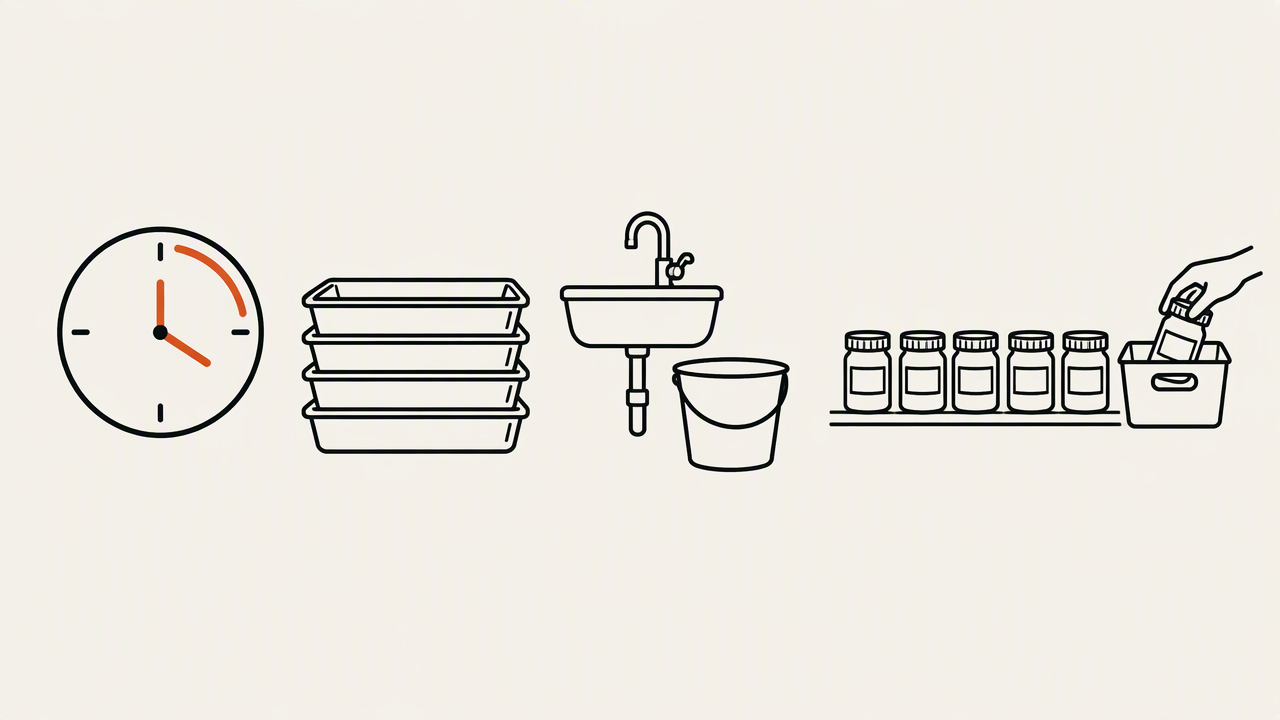
Every art educator knows the sudden spike of adrenaline that hits when five minutes remain on the clock, fifty desks are buried under glue pots, wet paper, and oil pastels, and the next class is already lining up outside the door. Without a precise, timed art lesson plan, the end of an art session quickly deteriorates into frantic shouting, clogged classroom sinks, ruined project work, and total linguistic breakdown.
This logistical challenge multiplies when teaching English as a second language (ESL) in international settings or high-density public schools. When students are navigating a foreign language alongside wet media, instructions must be crystal-clear, physical movement must be strictly routed, and clean-up cannot be treated as an afterthought. Effective classroom management for art teachers requires treating clean-up as an active instructional phase rather than a panicked race against the bell.
In this guide, we break down proven, class-size-aware clean-up staging routines designed for everything from intimate small-group workshops to high-density rooms of 50+ students. You will learn minute-by-minute pacing strategies for standard 40-minute periods, physical traffic-flow management, and practical English transition commands that turn routine tidy-up time into valuable language practice.
The Bottleneck Theory of Art Classrooms
Why does clean-up consistently fail in creative classrooms? The root cause is almost never student defiance; it is an infrastructure bottleneck.
Most classrooms feature a single trash bin, one or two water taps (or none at all), and narrow walkways between fixed desks. When a teacher announces "Time to clean up! Everyone throw your scraps away and wash your hands," forty to fifty children attempt to access the exact same two square meters of floor space simultaneously.
CHAOTIC CLEAN-UP (Simultaneous)
[50 Students] ─── ALL AT ONCE ───► [1 Trash Can / 1 Sink] ───► Gridlock & Spills

STAGED CLEAN-UP (Phased Roles)
[Zone Monitors] ── Collect Supplies ──► [Central Storage]
[Captains]      ── Collect Paper    ──► [Drying Rack]
[Table Members] ── Wipe Desks       ──► [Seated & Ready]
To eliminate bottlenecks, clean-up logistics must be staged by zone, material, and role. Staging creates a predictable conveyor belt where students move in waves or remain seated while designated materials captains handle specific physical tasks.
Staged Clean-Up Routines for Classes from 10 to 50+ Students
Classroom dynamics shift radically based on student volume. A routine that works seamlessly in a boutique studio of 12 students will cause utter paralysis in a crowded public school classroom. Here is how to stage clean-up across three distinct room sizes.
┌─────────────────┬───────────────────┬────────────────────────────────────────┐
│ Class Size      │ Transition Model  │ Clean-Up Method                        │
├─────────────────┼───────────────────┼────────────────────────────────────────┤
│ 10–18 Students  │ Zone Rotation     │ Individual Return to 3 Color-Coded Hubs│
│ 20–35 Students  │ Table Captains    │ 1 Collector per Table of 4–6           │
│ 40–50+ Students │ Aisle Conveyor    │ Pass-Forward / Supply Monitor System   │
└─────────────────┴───────────────────┴────────────────────────────────────────┘
1. Small Groups (10 to 18 Students): The Zone Rotation Method
In smaller cohorts, common in private language centers or international preschools, the goal is teaching personal responsibility and spatial awareness.
- Zone 1: The Wet Hub (Sinks / Water Jars): Only two students allowed at a time. Paintbrushes are placed bristles-up in a drying tub rather than individually washed under running water during the rush.
- Zone 2: The Tool Caddy: Scissors, glue sticks, and markers are checked back into color-coded plastic bins.
- Zone 3: The Gallery Ledge: Finished or drying work is brought directly to a drying rack or dedicated shelf.
- Execution: Call small groups by table color or project element (e.g., "Red table, carry your artwork. Blue table, collect the markers.").
2. Mid-Sized Classes (20 to 35 Students): The Captains Model
In mid-sized settings, individual student travel across the room must be reduced by 75%.
- Role 1: The Paper Captain: Collects all wet artwork from their designated table cluster using two hands, carrying the batch flat to the drying station.
- Role 2: The Material Captain: Gathers all dry supplies into a single table basket and brings it to the front counter.
- Role 3: The Table Inspector: Remains seated, scans the floor for scrap paper, and ensures desktop surfaces are wiped clean using a single damp cloth.
- Execution: Only the Captains stand. The remaining 70% of the class stays seated, participating in a low-energy vocabulary chant or rhythm clap.
3. Large Classes (40 to 50+ Students): The Aisle Conveyor System
Managing large ESL class art activities in standard public school layouts requires near-zero out-of-seat movement. Aisles are too narrow for 50 students to navigate safely with wet paint or sharp scissors.
- The Pass-Forward Protocol: Students pass tools down each row to the front-row student.
- Row 1 receives all glue sticks.
- Row 2 receives all scissors.
- Row 3 receives all scrap paper bins.
- Front-Row Monitors: Only the 4 to 6 students sitting in the very front row stand up to place the gathered bins onto the teacher’s demonstration table.
- Dry Waste Sweeps: Give the end-of-row student a cardboard "dust pan" box. Students sweep dry paper scraps directly into the box from desk height as it slides down the row.
Minute-by-Minute Pacing for Short 40-Minute Periods
A standard 40-minute ESL art class requires rigorous temporal discipline. If direct instruction runs two minutes long, or clean-up starts three minutes late, the entire routine disintegrates.
40-MINUTE LESSON PACING
00:00 ───┬── 05:00  Warm-Up & Demo (Extraction-First)
         ├── 08:00  Distribution & Safety Check
         ├── 24:00  Focused Independent / Paired Studio Time
         ├── 32:00  Staged Clean-Up (Strict Phase 1 & 2)
         ├── 38:00  Formative Language Assessment & Review
38:00 ───┴── 40:00  Structured Dismissal
Here is how to run a tightly paced session:
Phase 1: Set Up & Visual Demo (Minutes 0–8)
- 0:00 – 5:00 (Visual Extraction): Introduce the day’s core art element and target English words. Keep verbal output minimal for beginners by demonstrating actions visually. Check out our guide on Tier-Aware ESL Scaffolding to tailor instructions without overloading students linguistically.
- 5:00 – 8:00 (Supply Distribution): Never pass out supplies until instructions are complete. Distribute pre-portioned trays via table captains to prevent early fiddling.
Phase 2: Active Studio Work (Minutes 8–24)
- 8:00 – 22:00 (Deep Production): Sixteen uninterrupted minutes of student production. The teacher circulates for targeted ESL feedback and quick checks.
- 22:00 – 24:00 (Two-Minute Warning): Give a clear visual and auditory signal (e.g., flashing the overhead lights once or ringing a chime). Announce: "Two minutes to finish your lines. Put your lids on your glue."
Phase 3: The Staged Clean-Up (Minutes 24–32)
- 24:00 – 28:00 (Stage 1 - Tools & Waste): Tools are passed forward; scraps are collected in table bins.
- 28:00 – 32:00 (Stage 2 - Work Curation): Finished work is placed on drying boards or collected row by row. Desks are cleared completely.
Phase 4: Output, Review & Dismissal (Minutes 32–40)
- 32:00 – 38:00 (Quick Assessment): Because the room is clean early, students can engage in a calm 6-minute gallery walk, peer point-and-say, or quick choral vocabulary response.
- 38:00 – 40:00 (Row-by-Row Dismissal): Inspect desk surfaces and floors. Dismiss only the cleanest, quietest rows first.
Integrating English Transition Commands into Clean-Up Time
Clean-up should not mean switching back into chaos or abandoning English immersion. Transition routines present an ideal opportunity to reinforce Total Physical Response (TPR), actionable imperatives, and call-and-response rhythm patterns.
┌───────────────┬──────────────────────────────────┬─────────────────────────────┐
│ Language Tier │ Spoken Teacher Cue               │ Student Physical Action     │
├───────────────┼──────────────────────────────────┼─────────────────────────────┤
│ Tier 1 (A0–A1)│ "Caps on! Snap, snap, snap!"     │ Click marker lids closed    │
│ Tier 1 (A0–A1)│ "Flat hands on the table."       │ Hands flat; stop working    │
│ Tier 2 (A2)   │ "Scrap paper into the blue box." │ Pass paper scraps forward   │
│ Tier 2 (A2)   │ "Brushes sleep in the water cup."│ Place brush handle up in tub│
│ Tier 3 (B1+)  │ "Inspect your partner's station."│ Check floor and desk for dry│
└───────────────┴──────────────────────────────────┴─────────────────────────────┘
1. Rhyming Call-and-Response Chants
Rhymes naturally cut through the noise of paper rustling and chair movement. Practice these during the first week of class until they become automatic reflexes:
Teacher: "Hands up high!"
Students: (Raise hands) "Hands on desk!" (Place palms flat on wood)
Teacher: "Markers, markers..."
Students: "Click, click, shut!" (Snap caps onto markers firmly)
Teacher: "One, two, eyes on you!"
Students: "Three, four, clean the floor!"
2. Tier 1 Scaffolding (Zero-Verbal Demand)
For beginner ESL students, clean-up instructions must rely on physical modeling rather than complex sentences. Avoid saying: "Make sure you tidy up all the small fragments of construction paper before returning your scissors to the blue plastic tote."
Instead, use simple two-word imperatives paired with exaggerated gestures:
- "Show me scissors!" (Students hold up scissors in a closed grip).
- "Pass left!" (Students hand them to the left aisle seat).
- "Hands parked!" (Students cross arms or place palms down to signify they are finished).
When working in environments with zero physical supplies or non-traditional layouts, you can adapt these management routines using our strategies for Empty Room Mode art activities.
4 Rules for Painless Wet Media Management
Watercolors, acrylics, and wet glue create the highest risk of classroom disasters. Implement these four structural rules to eliminate sink backups and spills:
                  WET MEDIA CONTAINMENT WORKFLOW

 ┌──────────────────────────────────────────────────────────────┐
 │ 1. DAMP SPONGE STATIONS                                      │
 │    No running sinks. 1 damp cellulose sponge per table group.│
 └──────────────────────────────┬───────────────────────────────┘
                                │
                                ▼
 ┌──────────────────────────────────────────────────────────────┐
 │ 2. TWO-BRUSH LIMIT                                           │
 │    Students get maximum 2 brushes. Eliminates massive washing.│
 └──────────────────────────────┬───────────────────────────────┘
                                │
                                ▼
 ┌──────────────────────────────────────────────────────────────┐
 │ 3. "DIRTY TUB" SYSTEM                                        │
 │    Brushes placed in a soapy bucket to soak; washed LATER.   │
 └──────────────────────────────┬───────────────────────────────┘
                                │
                                ▼
 ┌──────────────────────────────────────────────────────────────┐
 │ 4. CARD BOARD DRYING DECKS                                   │
 │    Whole rows place art onto 1 large sheet of cardboard.     │
└──────────────────────────────────────────────────────────────┘- Ditch the Running Water Sink: Never let 40 students walk to a sink to rinse brushes during class. Place a single plastic "Dirty Brush Bucket" filled with 3 cm of soapy water at the teacher’s table. Brushes stay there until after dismissal.
- The Sponge Swatch: Provide each table of 4–6 students with one damp kitchen sponge. Instead of running back and forth with paper towels, students wipe small paint spills and sticky glue fingertips directly on the sponge.
- The Two-Brush Rule: Restrict students to one flat brush and one round detail brush. Giving children access to five or six brushes simultaneously creates unnecessary washing overhead and leads to water cups spilling.
- Batch Transport Decks: Cut discarded delivery boxes into flat cardboard transport trays (approx. 40x60 cm). The paper captain collects an entire row’s wet paintings onto one tray and slides it into a drying rack in a single trip.
Automate Your Timed Art Lesson Plans
Designing minute-by-minute lesson structures that account for class size, English language tiers, and specific supply limitations can take hours of manual preparation each week.
If you teach multiple grade levels and room layouts, you can generate complete, timed curricula using the Free AI ESL Art Lesson Plan Generator.
Try the EEEEK! Lesson Generator to instantly produce printable, step-by-step plans complete with:
- Deterministic clean-up staging calculated for your exact student count (from 5 to 60+ students).
- Scaffolded English scripts matching your students' language level (Tier 1, 2, or 3).
- Dynamic substitute supply lists tailored to whatever materials you actually have on your shelves.
Frequently Asked Questions
How do I manage art clean-up if I don't have a sink in my classroom?
Never attempt to transport open water buckets during class time. Use water-brush pens (pens with built-in water reservoirs), wet wipes, or single damp sponges placed in shallow plastic trays at each table cluster. Collect used brushes in a dry bin and wash them in a staff room sink after your teaching block concludes.
What should early finishers do during clean-up time?
Assign early finishers clear operational roles: "Scrap Detective" (spotting paper on the floor), "Supply Auditor" (counting scissors into cases), or "Drying Rack Guard" (guiding students where to lay their wet sheets). Giving them physical responsibility prevents behavioral issues while others finish their artwork.
How much time should I dedicate to clean-up in a 40-minute class?
Allocate exactly 8 minutes for clean-up in a standard 40-minute class: 4 minutes for tools, scraps, and surfaces, and 4 minutes for art storage and transition checks. In mega-classes of 45+ students, expand this to 10 minutes by starting clean-up at minute 30.
How do I stop students from rushing clean-up just to play?
Use an "Inspection Gate" system. No student may leave their seat or line up until their specific table zone passes a 3-point visual inspection: cleared tabletop, empty under-desk floor, and supplies correctly nested. Dismiss tables individually based on quality of cleanliness.
Conclusion
Managing an art classroom full of active learners does not require raised voices or chaotic end-of-period scrambles. By treating clean-up as an intentional, staged instructional block, you protect instructional time, preserve expensive classroom materials, and keep your stress levels manageable.
Whether you are coordinating twelve kindergarteners in a specialized studio or fifty middle schoolers in a high-density language program, the key lies in eliminating foot-traffic bottlenecks, delegating discrete physical roles, and keeping spoken commands simple and rhythmic.
To take the manual calculation out of your weekly scheduling, generate your first staged lesson plan with EEEEK! and get customized, class-size-aware timing built directly into your next art session.